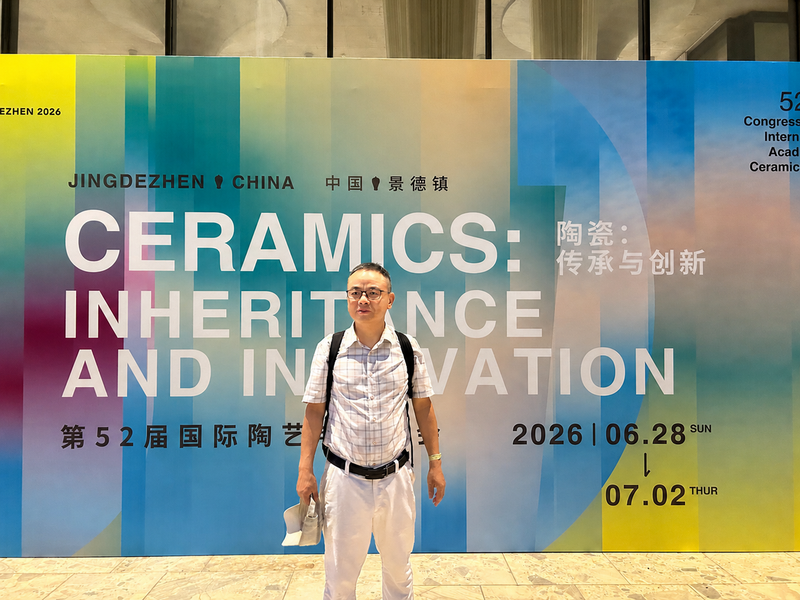
2026 IAC Congress in Jingdezhen: Was It Worth Attending?
My Personal Experience at the International Academy of Ceramics Congress
Every two years, the International Academy of Ceramics (IAC) brings together ceramic artists, educators, museum professionals, curators, collectors, and researchers from around the world. In 2026, this prestigious international gathering was held in Jingdezhen, China—the city widely recognized as the world’s porcelain capital.
The congress took place from June 27 to July 2, 2026, attracting participants from dozens of countries for six days of lectures, exhibitions, cultural visits, networking, and professional exchange.
As someone who attended the event in person, I often hear the same question from artists and students who were unable to come:
Was the 2026 IAC Congress in Jingdezhen really worth attending?
My answer is yes.
Rather than providing a day-by-day schedule, I’d like to share the highlights that made this congress a memorable experience and explain why Jingdezhen was such an exceptional host city.
1. An Inspiring Venue That Blends History with Contemporary Design
The main venue for the congress was the Taoxichuan Grand Theatre, located within the Taoxichuan Cultural and Creative District.
What makes this location remarkable is its history. The entire district was once an active porcelain factory. Instead of replacing the industrial buildings, the original workshops and factory structures were preserved and transformed into a modern cultural destination by an international architectural team.
Today, the Grand Theatre, the surrounding creative district, and the nearby Hyatt Place Hotel form one of Jingdezhen’s most vibrant cultural centers. Visitors experience a unique combination of industrial heritage, contemporary architecture, galleries, cafés, museums, and public art.
Although the district experienced a quieter period during the pandemic, it has quickly become one of the city’s most dynamic destinations and proved to be an outstanding venue for an international ceramics congress.
2. The Greatest Value of the Congress: International Connections
While the lectures were informative, the greatest value of the IAC Congress was undoubtedly the opportunity to connect with people.
Throughout the event, large digital displays introduced IAC members by presenting their photographs, biographies, and representative works. New members were officially welcomed during a special introduction ceremony, creating a meaningful moment of recognition within the international ceramic community.
Over three days, artists, educators, researchers, and museum professionals shared presentations covering ceramic education, artistic practice, cultural heritage, research, and innovation.
Because ceramic artists are spread across different countries and continents, opportunities for face-to-face interaction are relatively rare. The IAC Congress creates a unique environment where conversations continue long after each presentation has ended.
Many collaborations, friendships, residency opportunities, and exhibition ideas begin with a simple conversation during a coffee break.
3. Why Jingdezhen Is an Ideal Host City
One of the greatest strengths of the 2026 congress was its location.
Jingdezhen is not simply another conference destination—it is a city with more than a thousand years of continuous porcelain production.
The organizers arranged cultural visits to several of the city’s most important ceramic landmarks, including:
- Ancient Kiln Folk Customs Museum
- Imperial Kiln Museum at Taoyangli
- China Ceramic Museum
- Yaoli Ancient Town and its surrounding tea plantations
These excursions allowed international visitors to experience Jingdezhen beyond the conference hall.
Participants staying near the Taoxichuan Creative District could also explore weekend art markets, local galleries, cafés, and creative spaces within walking distance.
Many attendees visited the Sculpture Factory Night Market and the Creative Market organized by The Pottery Workshop, where independent ceramic artists from China and abroad sold one-of-a-kind handmade works directly to visitors.
Very few cities offer such a complete ceramic ecosystem. Museums, working studios, educational institutions, artist communities, traditional craftsmanship, contemporary design, and active ceramic markets all exist within the same city.
That is what makes Jingdezhen truly unique.
4. The International Ceramic Art Biennale Added Even More Value
One fortunate coincidence made the 2026 congress even more rewarding.
During the same period, the International Ceramic Art Biennale at Jingdezhen Ceramic University was also open to the public.
The exhibition brought together outstanding ceramic works from artists representing many different countries and artistic traditions.
Visitors not only viewed award-winning pieces but also learned about the artists’ creative processes, inspirations, and professional journeys.
The opening ceremony featured an official awards presentation that created an inspiring atmosphere for students, educators, collectors, and professional artists alike.
For younger ceramic artists especially, it was an exceptional opportunity to study internationally recognized contemporary ceramic art in one place.
5. Experiencing the Lifestyle of Jingdezhen
The congress was not entirely focused on lectures and academic discussion.
Daily coffee breaks, buffet lunches, and evening dinners created relaxed opportunities for conversation outside the formal conference program.
Many meaningful discussions happened over meals rather than inside the lecture hall.
Beyond the conference itself, visitors experienced the rhythm of everyday life in Jingdezhen.
Local restaurants, cafés, traditional tea, ceramic shops, artist studios, and creative markets all contributed to a deeper understanding of the city.
Attending the IAC Congress was not only about professional development—it was also about experiencing the culture, hospitality, and creative atmosphere that make Jingdezhen so special.
6. A Few Areas That Could Be Improved
Overall, I believe the congress was professionally organized and highly successful.
However, like any large international event, there were a few aspects that could be improved.
Some opening speeches repeated similar welcome messages and official greetings. Better coordination could make future ceremonies more concise and engaging.
Simultaneous interpretation was available primarily in Chinese, English, and French. Participants who spoke Spanish, Japanese, Arabic, or other languages occasionally faced communication challenges during discussions and audience questions.
Some keynote speakers are internationally respected figures whose influence has been built over decades. For attendees unfamiliar with their long careers, a single lecture may not fully communicate why these individuals hold such an important place in the ceramic world.
Finally, a few presentations were highly specialized or focused primarily on personal projects. While valuable to some audiences, they may have felt less relevant to participants working in different areas of ceramics.
These observations are relatively minor and did not diminish the overall quality of the congress.
7. Despite Heavy Rain, the Congress Ran Smoothly
Jingdezhen experienced several days of continuous rain during the congress, and parts of the city saw localized flooding.
Some transportation and outdoor activities were affected.
Nevertheless, the congress proceeded remarkably smoothly, and the organizing team successfully maintained the overall schedule.
Considering the weather conditions, the event management demonstrated excellent planning and coordination.
Final Thoughts
So, after spending six days at the 2026 IAC Congress, my conclusion is straightforward.
Yes, it was absolutely worth attending.
The congress offered far more than lectures and presentations.
It provided an opportunity to experience Jingdezhen’s unique ceramic culture, meet artists from around the world, exchange ideas across cultures, and become part of a truly international ceramic community.
For ceramic artists, educators, researchers, collectors, and students, few events offer such a rich combination of professional networking, cultural exploration, artistic inspiration, and historical context.
The next IAC Congress will be held in India, and I look forward to seeing how India presents its own ceramic traditions and artistic heritage to the international community.
If you attended the 2026 congress, I would love to hear about your experience and perspectives. Every participant sees the event differently, and those different viewpoints help us better understand not only the congress itself but also the evolving future of ceramics worldwide.
About the Author
My name is Li Sheng.
I document ceramic art, artist residencies, international exhibitions, and creative life in Jingdezhen, China. Through interviews, documentaries, and cultural storytelling, I hope to introduce the people, places, and traditions that continue to shape the world’s most famous porcelain city.
Thank you for reading, and I hope to see you again in future articles and videos.